
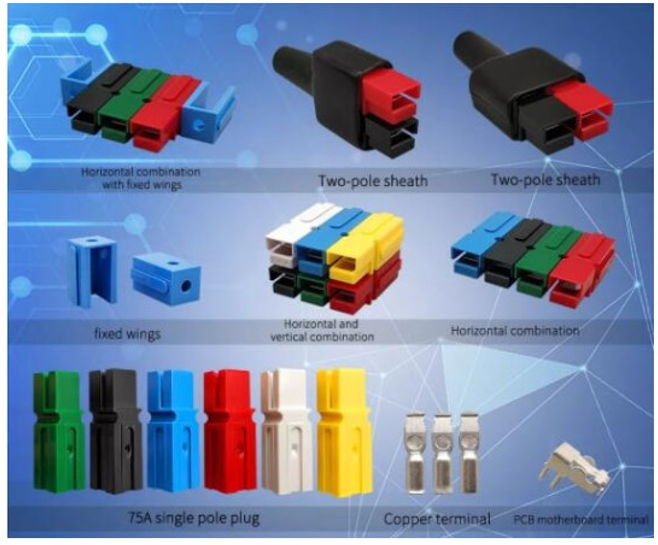
A heavy-duty connector is a type of electrical connector specifically designed to handle high currents, high voltages, harsh environments, or a combination of these. They are commonly used in industrial, automotive, forklift, and other demanding applications where ordinary connectors would fail. Let’s break it down clearly: Key Characteristics of Heavy-Duty Connectors High Current Capacity Can carry tens to hundreds of amps safely without overheating. Often used for power delivery in motors, batteries, or industrial equipment. Robust Construction Made from strong metals like copper alloys, brass, or tinned copper for the contacts. Housings are usually industrial-grade plastics or thermoset materials, resistant to impact, vibration, and heat. Durability and Reliability Withstand mechanical stress, repeated mating cycles, and vibration. Often designed to prevent accidental disconnection. Environmental Resistance Designed for dusty, wet, corrosive, or extreme temperature conditions. Many meet IP (Ingress Protection) ratings or NEMA standards for moisture and dust protection. Safety Features Polarized designs prevent incorrect connections. Locking mechanisms or latches reduce the risk of accidental disconnection. Can include insulation to prevent sparks and short circuits. Ease of Maintenance Often modular or easy to plug/unplug for battery swapping, maintenance, or repairs. May be designed for quick connection/disconnection even with gloves or in tight spaces. Common Applications Industrial machinery: CNC machines, conveyors, and robots. Electric vehicles and forklifts: Battery connections and motor power feeds. Renewable energy systems: Solar panels, wind turbines, and energy storage. Heavy-duty trucks and military vehicles: High-current power distribution. Examples of Heavy-Duty Connectors SMH Powerpole connector / SY Series(equivalent to SB connector): Used in forklifts, industrial power, and renewable energy. MIL-SPEC connectors: Military-grade connectors designed for rugged conditions. Circular heavy-duty connectors: Used in industrial automation and machinery. In short, a heavy-duty connector is an industrial-strength connection solution, built to safely transfer high power in tough conditions while minimizing maintenance issues.
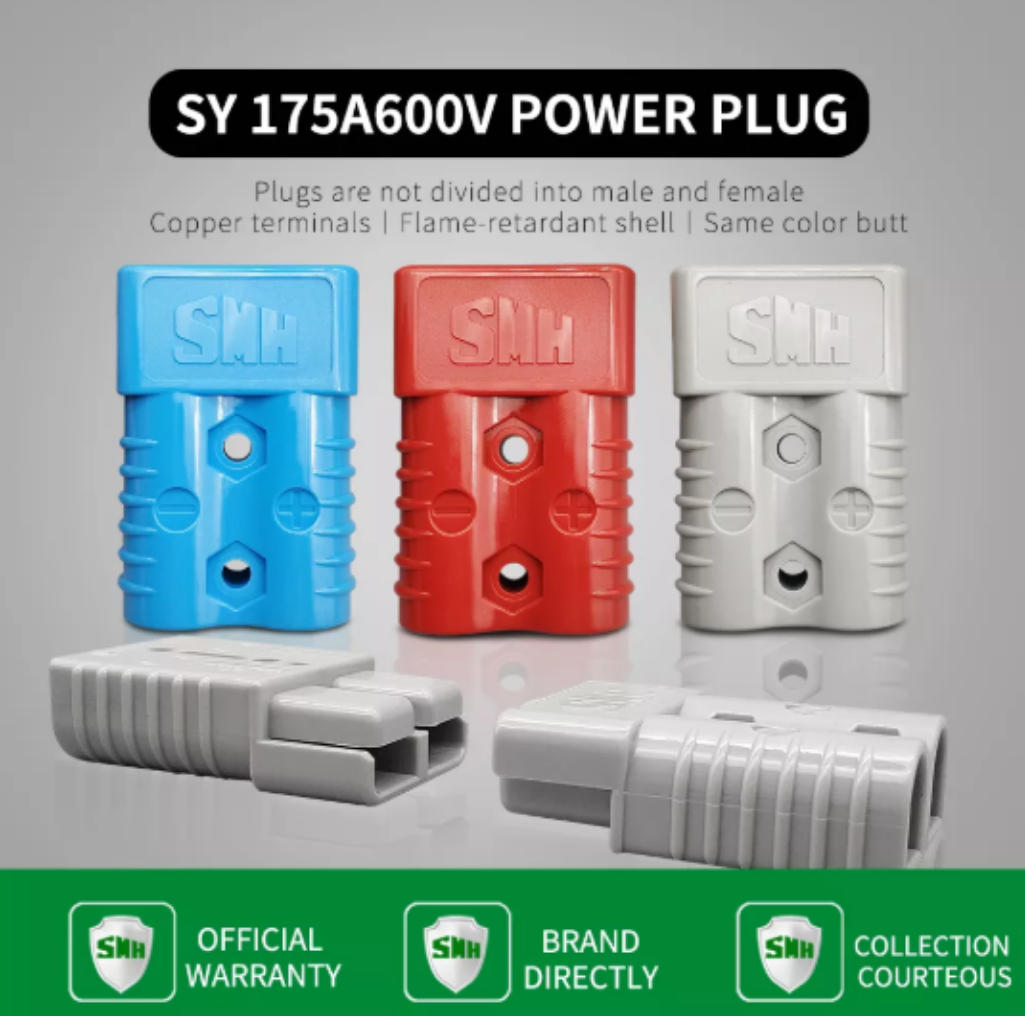
Introduction to SMH Forklift Battery Connectors Types
Forklifts, especially electric ones, rely on large traction batteries to provide the energy needed for lifting, moving, and maneuvering. To safely and efficiently connect these high-current batteries to the forklift’s electrical system, specialized battery connectors are used. SMH connectors are designed to handle high currents, ensure safety, and allow easy maintenance. Key Features of SMH Forklift Battery Connectors High Current Handling Forklift batteries typically range from 24V to 80V DC, with currents often hundreds of amps. Connectors must be rated for these high currents without overheating. Durable Construction Made from heavy-duty metals like copper alloys or tinned copper for terminals. Housings are often industrial-grade plastics resistant to impact, chemicals, and heat. Safety and Polarity Connectors are polarized, meaning they only fit in the correct orientation to prevent reverse polarity. Many include locking mechanisms to avoid accidental disconnection during operation. Ease of Maintenance Forklift batteries require regular charging and sometimes swapping. SMH connectors are designed for quick plug-and-play operation, reducing downtime. Environmental Resistance Rated for wet, dusty, and high-vibration industrial environments. Often compliant with IP-rated standards for moisture protection. Common Types of Forklift Battery Connectors SY Series SY175 / SY350(equivalent to SB Series SB175 / SB350) Widely used for forklift batteries. Modular, high-current, and genderless design. DIN-Style Connectors(equivalent to REMA connector, also called Euro Din Connector) Standard in European forklifts. Robust and keyed to prevent incorrect mating. Blade or Pin Connectors Simple flat or round metal contacts. Often used for internal battery connections or smaller forklifts. Proprietary SMH Connectors Designed by battery or forklift manufacturers. Optimized for very high currents and quick connection/disconnection. Why Connector Choice Matters Safety: Prevents sparks, shorts, and overheating. Reliability: Ensures consistent operation in heavy-duty environments. Maintenance Efficiency: Reduces time needed to replace or charge batteries.
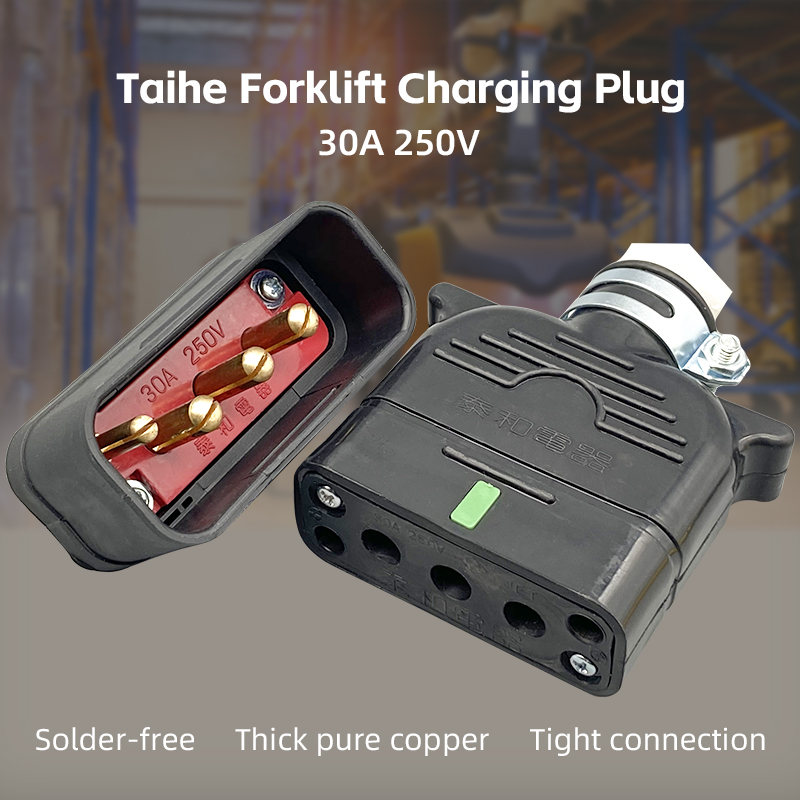
Taihe Forklift power plug introduction and applications
Here’s a detailed introduction to Taihe Forklift power plugs and their applications: Overview of Taihe Forklift Power Plugs Taihe is a brand that produces industrial-grade power plugs, connectors, and charging systems specifically designed for electric forklifts and material handling equipment. These plugs are critical components in battery management systems for forklifts, ensuring safe and efficient transfer of electricity between chargers and batteries. Key features: High current capacity: Designed to handle large currents needed for forklift battery charging, often ranging from 30A to over 200A. Durable construction: Usually made from high-quality thermoplastics or reinforced materials to withstand industrial environments. Safety mechanisms: Often include features like anti-sparking contacts, locking mechanisms, and IP-rated protection against dust and moisture. Standardized interfaces: Many Taihe plugs comply with international standards for industrial battery charging (IEC 60309 or proprietary forklift standards). Types of Taihe Forklift Power Plugs Taihe offers several types based on current rating, voltage, and application: AC Charging Plugs Used for connecting forklifts to AC chargers. Supports single-phase or three-phase input. Often includes mechanical locking to prevent accidental disconnection. DC Charging Plugs Direct connection for fast-charging lithium-ion or lead-acid batteries. High-current contact design for efficient energy transfer. Battery Connector Plugs Connects the forklift’s battery to the charging station. Ensures polarity protection and secure fit to prevent sparks. Applications Taihe Forklift power plugs are used in multiple industrial scenarios: Material Handling Warehouses Powering electric forklifts used in logistics, storage, and distribution centers. Ensures continuous operation through reliable battery charging. Manufacturing Plants Connects industrial electric vehicles to battery charging infrastructure. Enables fast turnaround for shift operations in production lines. Port and Shipping Terminals Supports battery-powered forklifts and automated guided vehicles (AGVs) in heavy-duty environments. Retail and Cold Storage Enables forklifts to operate in temperature-controlled environments. Plugs often have enhanced insulation for low-temperature use. Benefits Safety: Reduced risk of electric shock or fire. Reliability: Long-lasting connectors designed for industrial wear and tear. Compatibility: Works with various forklift brands and charging systems. Ease of use: Quick connect/disconnect with locking mechanisms.
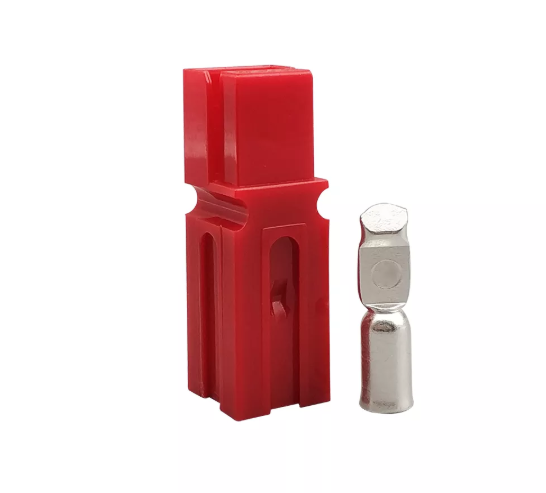
SMH Powerpole Connector Features and Introduction
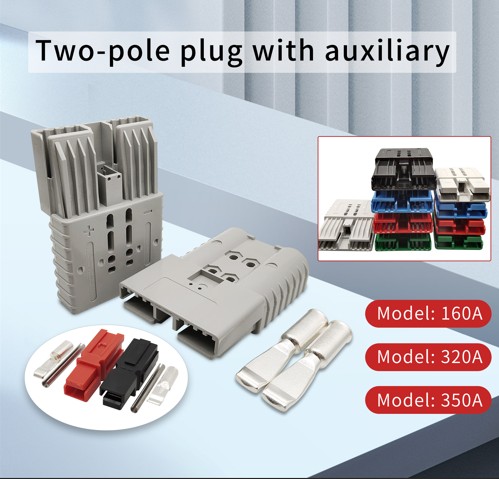
Powerpole connectors are a popular choice for DC power connections in hobbyist, amateur radio, and industrial applications because of their modularity, reliability, and ease of use. Let’s go through their key features in detail: Modular Design Stackable and keyed: Powerpole housings can be connected side-by-side in any combination, allowing multiple circuits to be integrated neatly. Genderless: Each housing is identical, so any connector can mate with any other as long as the terminals are correctly oriented. Color-coded: Housings often come in standard colors (red for positive, black for negative) to prevent polarity mistakes. High Current Capacity Amperage ratings: SMH provides power connectors ranging from 30A to 350A, Including PP30A, PP45A, PP75A…etc, depending on wire gauge and terminal type. Low contact resistance: Gold- or tin-plated contacts ensure minimal voltage drop and heat buildup. Reliable Electrical Contact Crimp or solder terminals: Secure mechanical and electrical connections. Spring-loaded contact design: Ensures consistent contact force and reduces the risk of intermittent connections under vibration. Durability and Safety Durable plastic housing: Resistant to heat, chemicals, and impact. Polarization features: Prevents incorrect mating. Secure locking: Once connected, Powerpoles resist accidental separation. Ease of Use Tool-assisted or hand crimping: Terminals are easy to attach to wires. Simple mating and separation: Requires only a slight pressure to connect or disconnect. Versatility Widely standardized: Used in amateur radio, RC, robotics, and industrial applications. Customizable configurations: You can make multi-pole assemblies for positive, negative, or multiple circuits. Reusability: Terminals can be removed and reused in different housings. Environmental Tolerance Temperature range: Typically from −20°C to +105°C for housings. Vibration resistance: Maintains electrical continuity in mobile or harsh environments.
Material Handling Industry Introduction and Recommended Battery Plugs
What is the Material Handling Industry? The material handling industry focuses on the movement, protection, storage, and control of materials throughout manufacturing, warehousing, distribution, consumption, and disposal. Essentially, it’s about getting the right materials to the right place, at the right time, safely and efficiently. Key aspects include: Equipment: Conveyors, cranes, forklifts, automated guided vehicles (AGVs), palletizers, robotic arms. Systems & Solutions: Warehouse management systems (WMS), automated storage and retrieval systems (ASRS). Processes: Loading/unloading, sorting, packaging, transporting, and inventory control. Industries Served: Manufacturing, logistics, retail, automotive, food and beverage, e-commerce. Goal: Reduce labor, improve efficiency, enhance safety, and optimize the flow of materials. Recommended Battery Connectors for Material Handling In material handling, equipment often operates in harsh environments—dust, moisture, vibration, temperature changes. So battery connectors need to be robust, reliable, and sometimes waterproof or vibration-resistant. Key types of SMH power connectors commonly recommended: SY175 & SY350 2pin power connectors(equivalent to SB175 & SB350) Euro din connector 160A/320A SBE320 & SBX350 Welcome to inquire us for more details including specifications and price lists.
Why do SMH 2pin Power Connector have different colors housing?
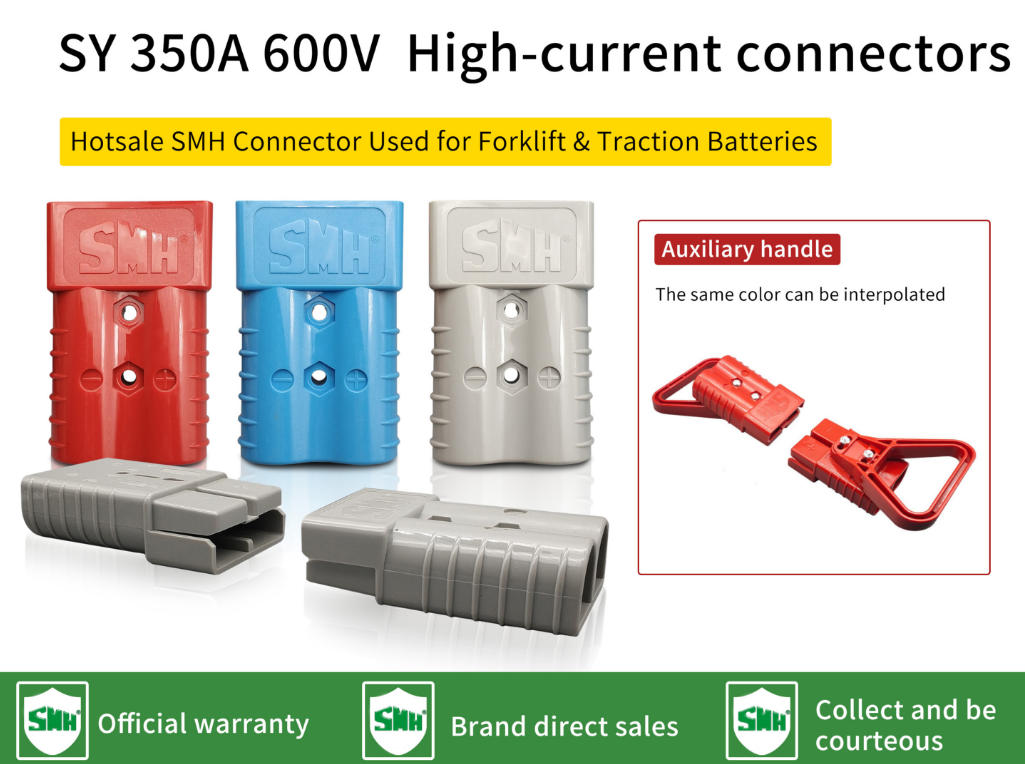
SMH 2pin Power Connector SY Series(equivalent to SB series SB50 / SB120 / SB175 / SB350) are heavy‑duty, genderless DC power connectors. Designed for high‑current battery and power distribution use, they mate quickly, reliably, and can be stacked or panel‑mounted. Key features Genderless design: identical plugs mate to each other, eliminating male/female mistakes. High current capacity: common ratings include 50A, 120A,175 A, 350 A depending on model and contact size. Robust contacts: high‑conductivity copper alloy contacts with plated finishes for low resistance and long life. Durable housings: flame‑retardant, high‑impact thermoplastic; some versions have environmental sealing. Versatile mounting: cable, chassis/panel, and PCB/mating options; available in single and multi‑pole arrangements. Keying & color options: polarization, keying kits, and color housings simplify system identification and prevent mis‑mating. Serviceability: replaceable contacts and a range of tooling for crimping and assembly. Why different colors housing connectors can’t match with each other? Voltage/system ID: colors are commonly used to denote different nominal voltages or battery systems so operators can quickly match compatible equipment. Safety / mistake prevention: different colors make it less likely to connect incompatible voltages (e.g., battery bank vs. charger) or wrong circuits. Keying & compatibility: alongside physical keying, color helps ensure mating only within the intended system. Customer/industry conventions: fleets or installations often adopt color standards (e.g., one color for 12 V, another for 48 V), though there is no single universal color code across all users. Product/material variants: sometimes color denotes special housings (UV‑stable, sealed versions) or aesthetic/branding choices. Manufacturing/ordering: colors simplify inventory and part selection for different applications. Please inquire us for more information if any doubts before ordering.
Forklift Battery Types and Recommended Plugs
Forklift battery choice affects vehicle uptime, maintenance, safety, and operating cost. Equally important is selecting the right charging and forklift power connectors (plugs) to ensure safe, reliable power transfer and compatibility between batteries, chargers, and vehicles. This article summarizes the main forklift battery technologies, their advantages and limitations, and practical guidance on commonly used plugs and connector selection. Forklift battery types Flooded (vented) lead‑acid (FLA) Description: Traditional, liquid electrolyte batteries with removable caps for watering and regular maintenance. Advantages: Low initial cost, proven reliability, wide availability, easy to service. Limitations: Require watering and regular equalization charging; emit hydrogen gas (ventilation required); heavier energy density than newer chemistries. Typical use: Heavy-duty all-shift operations where battery-swapping and rapid turnaround are practiced. Absorbent Glass Mat (AGM) and Sealed Lead‑Acid (SLA) Description: Valve-regulated lead‑acid (VRLA) variants with immobilized electrolyte (AGM) or gelled electrolyte. Advantages: Lower maintenance (no routine watering), reduced gassing, better resistance to vibration. Limitations: Higher cost than flooded cells; still heavier and lower cycle life than lithium; less tolerant of sustained fast charging. Typical use: Light to medium duty, applications where low maintenance and reduced ventilation are desirable. Gel lead‑acid Description: Electrolyte immobilized in gel; VRLA family. Advantages: Very low gassing, good deep‑cycle life in certain applications, low maintenance. Limitations: Sensitive to charging regime—overcharging can irreversibly damage cells; not ideal for high-rate fast charging. Typical use: Niche applications requiring deep discharge tolerance and minimal gassing. Lithium‑ion (Li‑ion) Description: Rechargeable Li‑ion battery packs with integrated Battery Management Systems (BMS). Advantages: High energy and power density, faster charging (opportunity charging), longer cycle life, no watering, minimal gassing, lighter weight, improved efficiency. Limitations: Higher upfront cost (lower TCO often), thermal management and fire-safety considerations, need compatible charger and BMS communication. Typical use: High-intensity, multi‑shift operations where space/weight and fast charging deliver productivity gains. Nickel‑Cadmium (Ni‑Cd) and other chemistries Description: Less common today for forklifts; Ni‑Cd offers robustness and tolerance to extreme temperatures. Advantages/Limitations: Niche use due to environmental/disposal concerns and cost. Typical use: Rare; specialized environments. Connector (plug) types and recommendations Key selection principles Current and voltage rating: Match connector ampacity and voltage to peak and continuous currents of charger/battery. Safety and standards: Prefer connectors that meet relevant standards (electrical, IP ingress protection, mechanical rating). Compatibility: Ensure vehicle, battery, and charger use the same connector family or provide approved adaptors. Durability and ease of use: Choose rugged, keyed connectors that resist arcing, corrosion, and mis-mating. Communication needs: For Li‑ion, ensure BMS/charger communication lines (CAN, SMBus, or dedicated signaling pins) are supported. Commonly used connectors SMH 2pin power connector series (SB175, SB350, etc.) Use: Very common for DC connections on forklifts, chargers, and battery packs. Why: Genderless design, high current capacity, robust contact area, easy to mate/unmate, available in multiple current ratings (suitable from small chargers up to high‑power systems). Recommendation: Use appropriately sized SY series (e.g., SB50 for lighter systems, SB350 or larger for high‑current industrial chargers). Ensure correct polarity and keying. Industrial AC plugs (IEC 60309 / CEE) Use: AC input for industrial chargers and charging stations. -Why: Standardized, rugged, and available in multiple voltage/current/pin configurations; suitable for temporary or fixed charger connections. Recommendation: Match phase (single/three-phase), voltage, and amp rating; ensure IP rating appropriate for environment. OEM / vehicle battery connectors and heavy‑duty plugs Use: Direct battery-to-vehicle terminals and high-current cable connections. Why: Provide low-resistance permanent connection for traction power. Recommendation: Use proper battery clamps/lugs sized to battery posts, with insulated covers for safety. Torque per manufacturer spec. Communication / signalling connectors (CAN, SMBus, custom) Use: Li‑ion battery packs require BMS communication to chargers or vehicle controllers. Why: Enables safe charging, state-of-charge reporting, and cell-level protection. Recommendation: Use standardized communication interfaces where possible and verify pinout/voltage levels with OEM. Other heavy‑duty DC connectors Use: Some fleets use alternative industrial plugs (high‑current ring terminals, DIN-style connectors or proprietary plugs). Recommendation: Where proprietary connectors are used, maintain OEM-approved spares and adapters. Practical recommendations Standardize across the fleet: Use the same connector families and ratings across vehicles and chargers to reduce adapters and human error. Match ratings with safety margin: Choose connectors rated above expected continuous current (25–30% headroom recommended). Choose IP-rated and corrosion-resistant materials for outdoor/washed environments. For Li‑ion retrofits: confirm BMS and charger communication compatibility and sufficiently robust connector for fast-charging currents. Implement lockout and interlock features where possible to prevent hot‑plugging under load or accidental disconnects. Maintain and inspect connectors regularly: check for wear, heat discoloration, and secure contacts. Conclusion Selecting the appropriate forklift battery plug depends on operating profile, budget, maintenance capacity, and safety/ventilation constraints. Connector choice is equally critical: favor rugged, correctly rated, and standardized plugs (e.g., SMH 2pin battery connector series for DC, IEC 60309 for AC) and ensure compatibility with vehicle and charger systems. Standardization, adequate current margins, and attention to communication requirements (for Li‑ion) will maximize safety and uptime.
Key Consideration Factors When Choosing a Forklift Charging Connector
Selecting the right charging connector for electric forklifts is crucial for safety, uptime, battery life, and total operating cost. A connector is more than a physical link: it must meet electrical, mechanical, environmental, and system-integration demands of the fleet and facility. The following outlines the primary factors to consider when choosing a forklift charging connector. Electrical performance Rated current and peak capacity: Choose a connector whose continuous and short-duration current ratings exceed charging and potential regenerative currents (allow 20–30% safety margin). Rated voltage: Ensure the connector’s voltage rating meets or exceeds the battery system and charger maximum voltages. Contact resistance and conductivity: Low contact resistance reduces heat and energy loss; high-quality contact materials (e.g., silver- or gold-plated copper alloys) improve performance. Polarity and anti-misconnection: Design must prevent reverse polarity and accidental short circuits. Thermal management and safety Temperature rise at rated current: Verify acceptable temperature increases and thermal endurance. Over-temperature protection: Consider connectors with built-in temperature sensors or compatibility with thermal monitoring to avoid overheating. Insulation and creepage distances: Proper insulation prevents arcing and leakage under operating conditions. Fire and flame resistance: Use materials with appropriate flammability ratings (e.g., UL94) for industrial safety. Mechanical design and durability Insertion/removal lifecycle: Match connector durability to expected plug/unplug frequency (thousands to tens of thousands of cycles). Locking and retention mechanisms: Positive locks or latches prevent accidental disconnects under vibration or movement. Robustness to shock and vibration: Industrial-grade housings and secure contact retention are essential in forklift environments. Ergonomics: Consider ease of handling—weight, grip, and required insertion force—for operators to reduce fatigue and misuse. 3.Environmental resistance IP and sealing: Select IP rating appropriate for the environment (dust, washdown, outdoor exposure — e.g., IP54, IP65). Corrosion and chemical resistance: Materials should withstand warehouse chemicals, cleaning agents, and salt fog where applicable. Operating temperature range: Ensure reliable operation across expected ambient temperatures (cold stores, hot warehouses). 4.Compatibility and standards Interoperability: Connector must be compatible with battery packs, chargers, BMS, and charging stations used by your fleet. Industry standards and certifications: Prefer connectors and vendors compliant with relevant safety and quality standards. Future-proofing and standardization: Standard connectors reduce inventory complexity and ease fleet expansions or vehicle swaps. Conclusion Choosing the right forklift charging connector requires balancing electrical and thermal capability, mechanical robustness, environmental protection, compatibility with battery and charger systems, and ongoing maintenance considerations. Prioritize safety and reliability first, then weigh features such as smart communication, serviceability, and long-term cost. For best results, define your fleet’s charging profile, operating conditions, and maintenance strategy, then validate candidate connectors with real-world testing before large-scale adoption. If you provide your forklift model, battery specs, and charging setup, I can recommend specific connector features and a short selection checklist.
SMH Euro Din Connector and Auxiliary pins Function
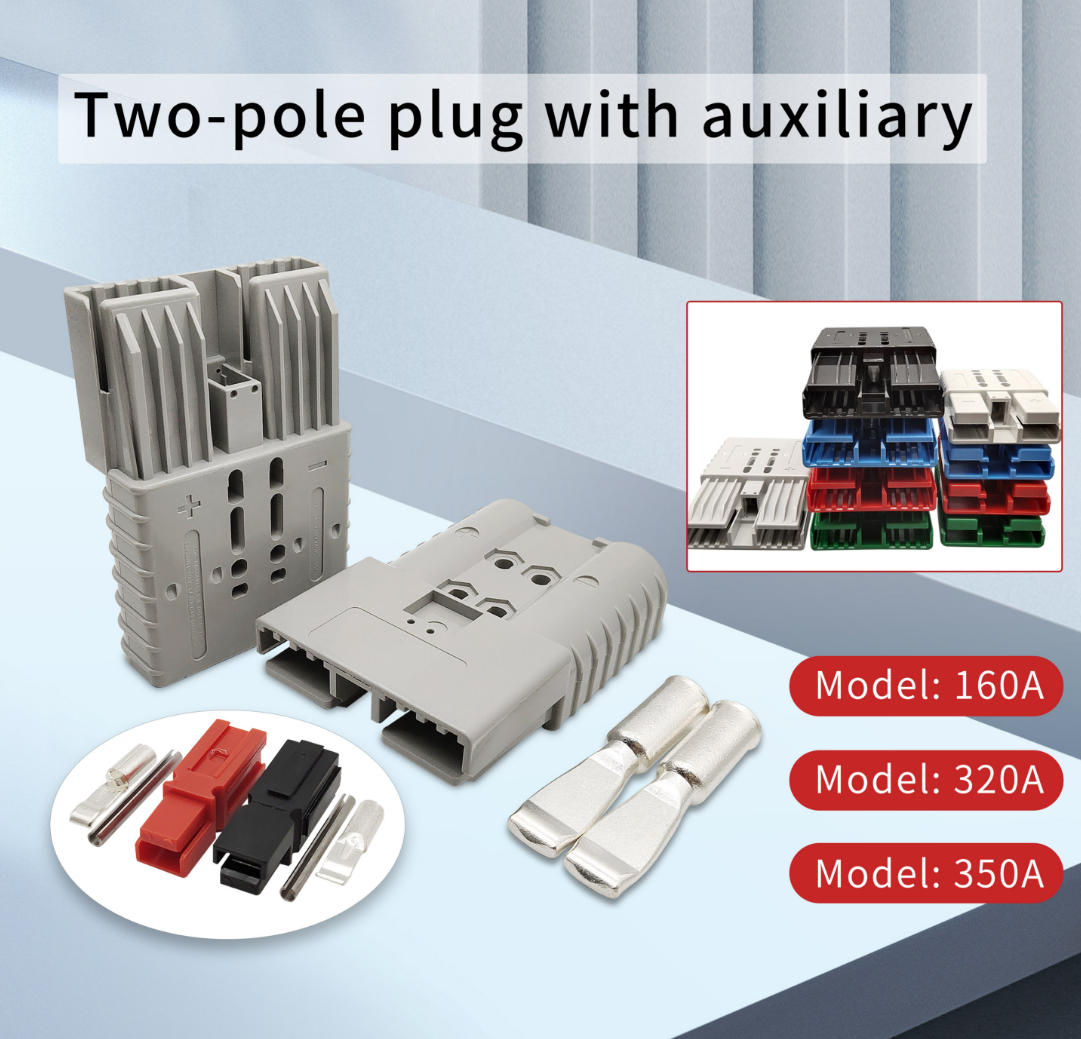
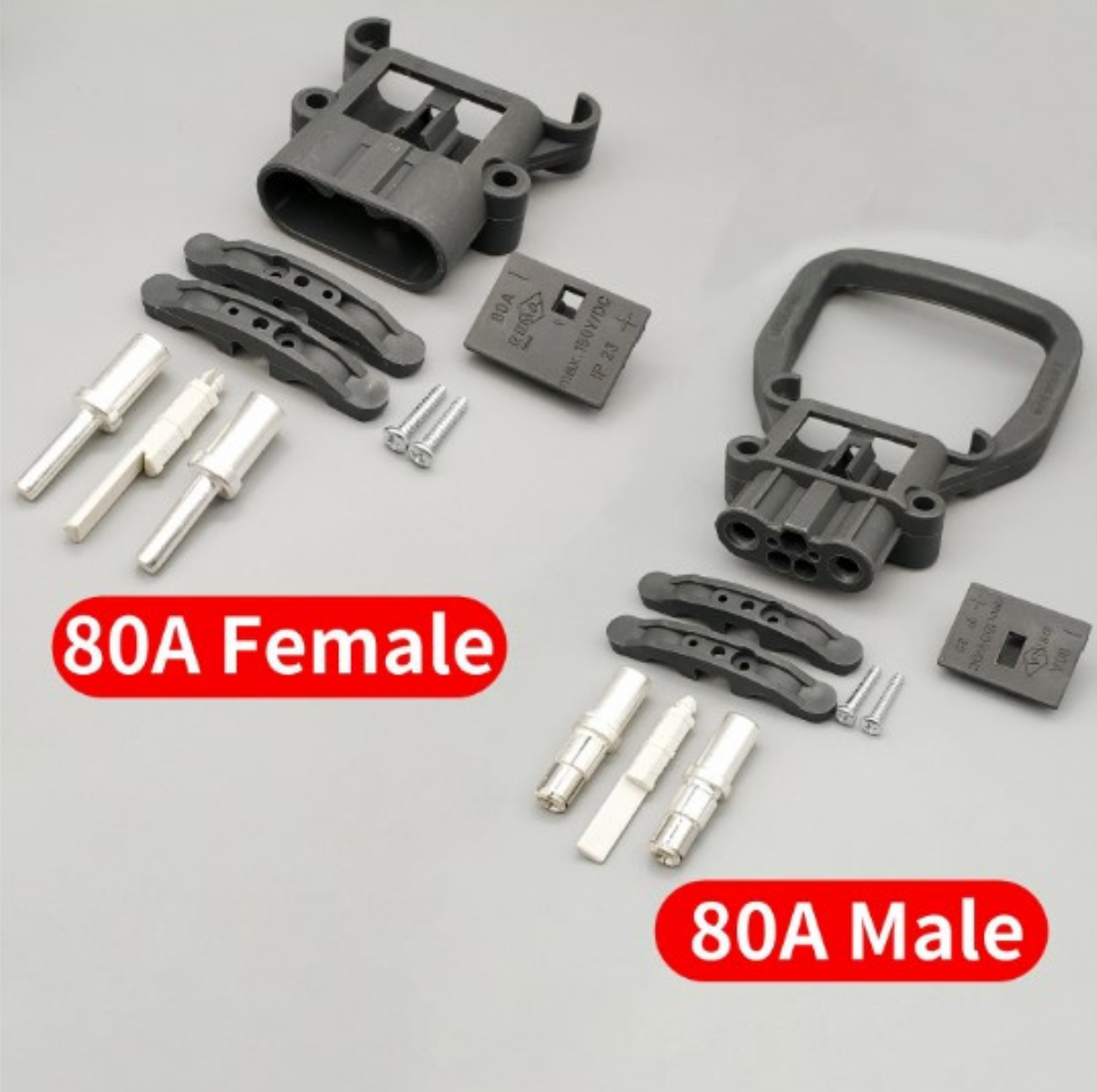
SMH Euro DIN connectors, also known as forklift charging connector, are robust, industrial-grade circular power/connectivity connectors used for battery, charging, and heavy-current applications. They follow DIN-style form factors with standardized mating dimensions for reliable connections in harsh environments. Ratings are 80A/160A/320A optional, wiring size vary from 25mm² to 95mm². Applications Battery chargers and connections for forklifts, industrial vehicles, and material handling equipment. Heavy-current power distribution in industrial settings. Charging interfaces for e-mobility and stationary battery systems. Harsh-environment power coupling where secure, high-current connections are required. Auxiliary pins on Euro DIN connectors provide control, signaling, sensing, and protective functions separate from the main power pins. Common functions include: Battery present / plug detect — signals that the connector is mated. Enable / inhibit (charge enable) — allows charger or vehicle control to enable/disable charging. Contactor/relay control — drives external contactors or receives contactor status. Pre-charge / bleed resistor control — used for pre-charging capacitors before full main-power connection. Voltage sense / polarity detect — low-current sense of battery or pack voltage for safety/logic. Temperature sensor (NTC) — monitors battery or connector temperature for thermal protection. Interlock / safety interlock — prevents operation unless a safety condition is met (door open, latch engaged). Ground/earth sense — verifies protective earth continuity. Communication (CAN, LIN, SMBus, UART) — data link for charger/vehicle/pack communication and diagnostics. Remote fault / status signals — indicate faults, charging complete, or state-of-charge. Keying / coding pins — mechanical/electrical keying to prevent mismating or select configurations. Pilot/pulse (PWM) — used in EV charging schemes to convey current limits or handshake signals. If you want to know more about SMH Euro Din connector details, welcome to contact us at info@smh-power.com.
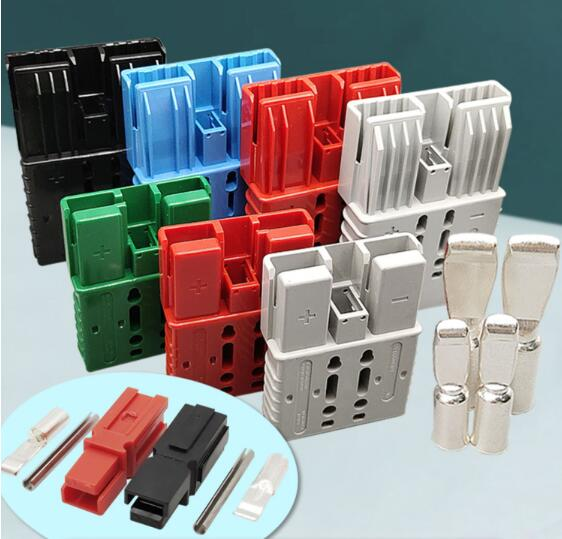
SBE320 SBX350 SMH battery plug introduction and applications
Introduction / key features: Type: Stacking, genderless power connectors with spring-clip contacts. They’re designed for high-current DC power connections and quick, tool-free mating. Current rating: SBE320 is typically specified around 320 A; SBX350 in the SBX family is commonly rated near 350 A (confirm exact rating from the manufacturer datasheet for your variant). Voltage: Intended for low-voltage DC systems (battery, inverter, etc.); working voltages vary by model—check the datasheet for exact maximum system voltage. Construction: Heavy-duty contacts (usually copper alloy, often plated), reinforced thermoplastic housings for mechanical/thermal durability, polarization/keying to prevent mis-mating. Key design traits: genderless/mate-any-way capability, stackability, high-cycle durability, low contact resistance, secure retention, and often modular mounting options (panel, cable). Environmental: Many variants are splash-resistant and tolerant of industrial environments; some versions offer higher ingress protection or insulating shrouds. Common applications: Battery connections for electric vehicles, forklifts, floorcare equipment, and material-handling vehicles. Renewable-energy systems (battery banks, hybrid storage/inverter connections). UPS and data-center battery/inverter power distribution. Heavy-duty industrial equipment and robotics requiring quick-disconnect high-current DC feeds. Telecom and power backup systems where high current, reliable DC connections are needed. Mobile power units, generators, and charging stations. Marine and off-grid systems with high-current battery interconnects. Installation & selection tips: Verify exact current and voltage ratings on the manufacturer datasheet for the specific SBE320/SBX350 part number before use. Choose correct cable AWG and crimp tooling specified by SMH to ensure low resistance and safe operation. Consider environmental sealing, mounting style (in-line, panel, or recessed), and whether keyed housings or shrouds are needed to prevent accidental disconnect or mis-mating. For series/parallel battery connections, ensure connectors and cables match system fault-current capability and thermal dissipation requirements. Follow manufacturer guidance for mating cycles, torque/crimp specs, and regular inspection in high-vibration or outdoor use.
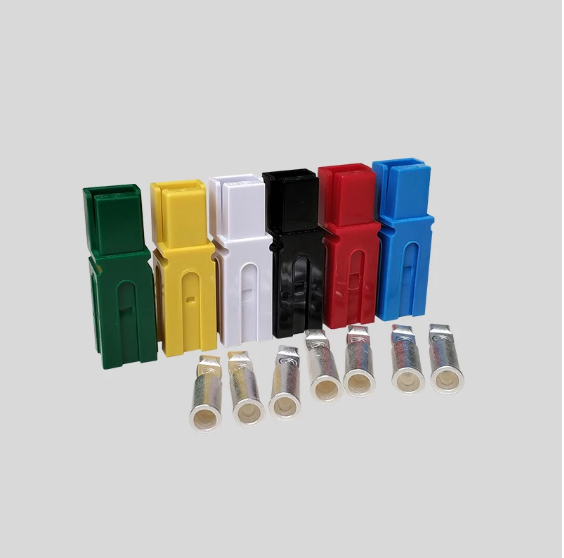
SMH 1pin Power Connector and Applications
SMH 1pin power connectors, or called powerpole connectors, are a type of modular, high-current electrical connector widely used in amateur radio, robotics, solar power systems, and other DC power applications. They are known for their reliability, ease of use, and flexibility. Here’s a detailed introduction: Design and Structure Modular Housing: Powerpole connectors use a rectangular, genderless housing that allows multiple connectors to be stacked side-by-side. Contacts: The metal contacts are typically silver-plated for corrosion resistance and conductivity. They are rated for repeated insertions. Polarity: Unlike traditional connectors, Powerpole connectors are genderless and keyed to prevent incorrect polarity when properly assembled. Current Ratings SMH offers Powerpole connectors in various sizes, commonly rated for PP15A, PP30A, PP45A, PP75A, PP120A, PP180A, PP350A These ratings depend on contact size and wire gauge. Key Features Tool-less Assembly: Many sizes allow crimping or soldering the contacts into wires and snapping them into housings. Stackable/Interlocking: Multiple housings can be stacked or keyed together for different voltages or functions. Durability: Designed for hundreds to thousands of mating cycles without significant wear. Universal Polarity: In standard configurations, red denotes positive and black denotes negative for DC applications. Applications Amateur Radio: For connecting radios to power supplies and batteries safely. RC/Robotics: High-current connections between batteries, motors, and controllers. Solar and Renewable Energy: Quick-disconnect for panels, charge controllers, and inverters. Industrial Equipment: Reliable power connections in automation or test setups. Advantages over Other Connectors Reliable Connection: High contact pressure ensures minimal voltage drop. Standardization: Widely adopted in amateur radio and maker communities. Flexible and Expandable: Can be configured in multiple ways without creating separate male/female parts. Safe: Keyed design prevents accidental reverse polarity. In short, SMH Powerpole connectors are versatile, safe, and easy-to-use connectors that simplify DC power distribution, especially in modular and high-current applications.
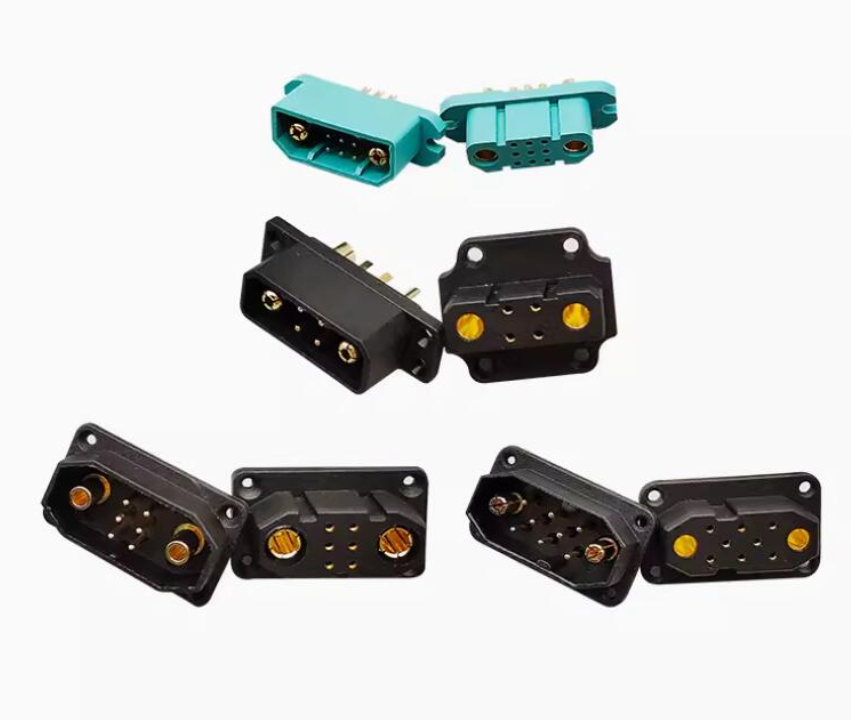
Must-Have for RC Enthusiasts! SMH VTOL Pro Connector, Unlock New Flying & Control Experience
What’s the most annoying thing about playing with RC models? Incompatible connectors, stuck plugging/unplugging, and unstable signals. At best, it affects control feel; at worst, it makes your carefully tuned model “break down” or even damages valuable accessories! Today, I’d like to recommend an all-in-one artifact to all RC fans — SMH VTOL Pro Connector JX4/JX6/JX8/JX9. Whether you have an RC car, drone, fixed-wing aircraft, or turbine jet model, it can perfectly fit and completely solve connection troubles. Core Product Highlights, Every Point Hits RC Enthusiasts’ Needs Full Coverage of Multiple Specifications, No Compatibility Worries Complete series of JX4, JX6, JX8, JX9. Features a 9+2 male-female quick-release plug design, paired with an MPX signal interface. It accurately matches VTOL vertical take-off and landing fixed-wing aircraft, RC model airplanes, turbine jet drones, RC cars and other equipment. No more worrying about finding compatible connectors — one set meets multiple model needs. Quick Plugging/Unplugging + Stable Signal Transmission, Smoother Control Exclusive quick-release design ensures smooth plugging and unplugging without jamming, and it won’t loosen easily even with frequent disassembly and assembly, greatly saving debugging and maintenance time. Built-in signal transmission module ensures synchronous transmission of power and signals, with no delay or interruption. Even during high-speed flight and intense control, it can maintain a stable connection, saying goodbye to the embarrassment of signal loss! Brand Guarantee + Authoritative Certification, Safe and Durable From the SMH brand with a solid reputation (available on official website), made in CN (Origin). Strictly complies with multiple authoritative certifications including CE, RoHS, UL, and cUL. The material is high-temperature resistant and wear-resistant, able to withstand vibrations and current impacts during RC model operation. It eliminates equipment failures caused by overheating or damage of connectors, maximizing service life! All-Round Adaptable Scenarios, Unlock More Gameplay Not limited to one type of model, it is widely used in various RC model accessories such as RC cars, drones, RC fixed-wing aircraft, and large gasoline turbine jet drones. Whether for casual play, professional debugging, or outdoor flying, it can hold steady and let your model perform at its best! RC Enthusiast’s True Review: “I’ve changed several connectors before. Either they were hard to plug/unplug, or the signal was unstable. Until I used this SMH one — the JX6 fits my fixed-wing perfectly, plugs smoothly, and has zero signal lag during flight. I no longer need to check the connection frequently!” For RC enthusiasts, a good connector is the key to improving control experience and protecting equipment. The SMH VTOL Pro series connectors balance compatibility, stability and durability. Whether you’re a beginner or an experienced player, it’s worth owning. Product Specification Overview ▫️ Brand: SMH ▫️ Model: JX4/JX6/JX8/JX9 ▫️ Type: Servo Quick Release Male-Female Plug, MPX Signal Connector, 9+2 Adapter ▫️ Certification: CE, RoHS, UL, cUL ▫️ Application: RC Cars, Drones, RC Fixed-Wing Aircraft, Turbine Jet Models, etc. Say goodbye to connection troubles and unlock full-scene gameplay for RC models. Hurry up and get the SMH VTOL Pro Connector, making every control smooth and every flight safe and worry-free! #RCAccessories #Drone Accessories #VTOL FixedWing #SMH Connector #JX4JX6JX8JX9